




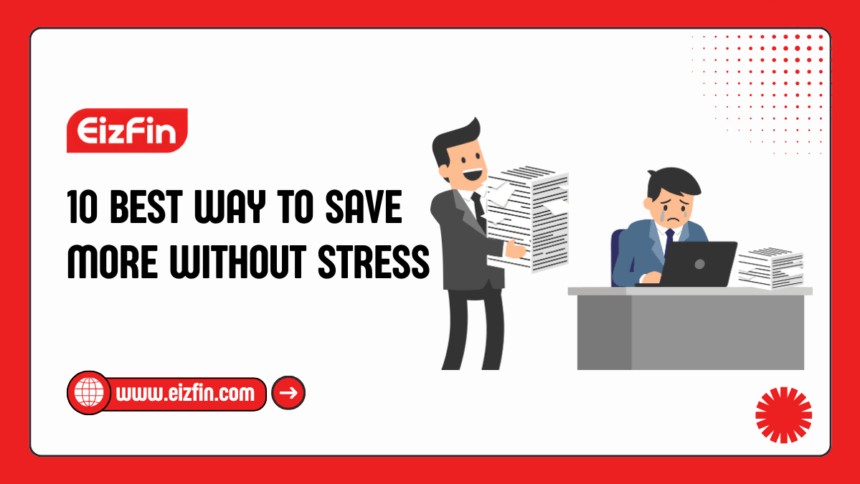
Do you feel guilty every time you try to save money?
Does cutting expenses feel like punishment rather than progress?
Do you want to build savings but hate the pressure and frustration that come with it?
- Why Saving Money Often Feels Stressful
- What It Really Means to Save More Without Stress
- 1 Pay Yourself First to Save More Without Stress
- 2 Use Automation to Remove Saving Pressure
- 3 Set Realistic Saving Goals You Can Maintain
- 4 Focus on Cash Flow Instead of Extreme Cutting
- 5 Build an Emergency Fund for Peace of Mind
- 6 Separate Savings by Purpose
- 7 Track Progress Without Obsessing
- 8 Increase Savings Gradually Over Time
- 9 Combine Saving With Smart Investing
- 10 Change Your Mindset Around Saving
- Common Saving Mistakes That Increase Stress
- How These Saving Strategies Work Together
- Frequently Asked Questions (FAQs)
You’re not alone. Many people associate saving money with sacrifice, restriction, and constant stress. But saving does not have to feel overwhelming. In fact, the right approach can help you save more without stress while still enjoying your life.
This in-depth guide on the 10 best way to save more without stress focuses on realistic, modern strategies that work for real people. These methods are designed to reduce pressure, remove guilt, and help you build savings consistently without burnout.
Why Saving Money Often Feels Stressful
Before learning how to save more without stress, it’s important to understand why saving feels difficult in the first place.


Common reasons include:
- Unrealistic saving goals
- Trying to cut everything at once
- Relying on willpower alone
- Emotional spending habits
- Lack of clear purpose
When saving feels forced, it rarely lasts. That’s why modern personal finance focuses on systems and habits that make saving feel natural instead of painful.



What It Really Means to Save More Without Stress
To save more without stress means creating a financial system that works quietly in the background.
Stress-free saving involves:
- Automation instead of constant decisions
- Clear goals instead of vague intentions
- Small, consistent actions instead of extreme cuts
- Flexibility instead of perfection
These principles guide the 10 best way to save more without stress outlined below.
1 Pay Yourself First to Save More Without Stress
One of the most effective ways to save more without stress is paying yourself first.



What Paying Yourself First Means
You save a fixed amount immediately when you receive income, before spending on anything else.
Why This Method Works
- Removes decision fatigue
- Builds consistency automatically
- Prevents guilt-driven saving
- Makes saving a priority
How to Apply This Method
- Choose a realistic savings percentage
- Automate the transfer on payday
- Treat savings like a mandatory bill
Simple Saving Allocation
| Purpose | Percentage |
|---|---|
| Emergency fund | 10% |
| Short-term goals | 5–10% |
| Long-term savings | 10–15% |
This method allows you to save more without stress because saving happens before spending decisions begin.
2 Use Automation to Remove Saving Pressure
Automation is one of the most powerful tools in modern personal finance.
Why Automation Reduces Stress
- Eliminates missed savings
- Removes emotional decisions
- Builds discipline effortlessly
- Keeps progress consistent
What You Should Automate
- Monthly savings transfers
- Emergency fund contributions
- Sinking funds for future expenses
Manual vs Automated Saving
| Aspect | Manual | Automated |
|---|---|---|
| Consistency | Low | High |
| Stress level | High | Low |
| Discipline | Variable | Fixed |
Automation helps you save more without stress by removing daily effort.
3 Set Realistic Saving Goals You Can Maintain
Unrealistic goals are one of the biggest sources of saving frustration.
Why Realistic Goals Matter
Goals should motivate you, not exhaust you.
Examples of Sustainable Saving Goals
- Emergency fund of 3–6 months
- Monthly savings of 10–20%
- Annual savings milestones
Goal Planning Table
| Goal | Time Frame | Stress Level |
|---|---|---|
| Emergency fund | Short-term | Low |
| Vacation fund | Short-term | Low |
| Retirement | Long-term | Moderate |
Realistic goals help you save more without stress because they fit your lifestyle.
4 Focus on Cash Flow Instead of Extreme Cutting
You don’t need to cut everything to save more.
Why Cash Flow Matters
Cash flow is about how money moves, not just how much you cut.
Smart Ways to Improve Cash Flow
- Reduce unused subscriptions
- Control impulse spending
- Delay lifestyle upgrades
- Save raises and bonuses
Cash Flow Improvement Example
| Action | Monthly Impact |
|---|---|
| Cancel subscriptions | Moderate |
| Reduce dining out | High |
| Save raises | Very high |
This approach helps you save more without stress while keeping your lifestyle intact.
5 Build an Emergency Fund for Peace of Mind
Stress-free saving starts with financial protection.
Why Emergency Funds Reduce Stress
- Prevent debt during emergencies
- Protect savings and investments
- Reduce financial anxiety
Emergency Fund Targets
- Minimum: 3 months of expenses
- Ideal: 6 months of expenses
Emergency Fund Best Practices
- Keep it separate from spending accounts
- Automate contributions
- Use only for true emergencies
Emergency funds make it easier to save more without stress because you’re prepared for the unexpected.
6 Separate Savings by Purpose
Mixing all savings into one account often leads to confusion and overspending.
Why Purpose-Based Saving Works
When money has a clear job, you’re less likely to spend it impulsively.
Common Saving Buckets
- Emergency fund
- Travel fund
- Home fund
- Investment fund
Purpose-Based Saving Table
| Account | Purpose |
|---|---|
| Emergency savings | Protection |
| Goal savings | Motivation |
| Long-term savings | Growth |
This method makes it easier to save more without stress by adding clarity.
7 Track Progress Without Obsessing
Tracking should motivate you, not pressure you.
Why Light Tracking Works
Overtracking creates anxiety and burnout.
How to Track Stress-Free
- Review savings monthly
- Track net worth quarterly
- Focus on trends, not daily changes
Tracking Comparison
| Style | Stress Level |
|---|---|
| Daily tracking | High |
| Monthly review | Low |
Balanced tracking helps you save more without stress and stay consistent.
8 Increase Savings Gradually Over Time
Saving more does not require sudden sacrifice.
Why Gradual Increases Work
Small increases feel painless but compound over time.
Easy Ways to Increase Savings
- Save part of raises
- Save bonuses or tax refunds
- Increase savings annually
Gradual Growth Example
| Year | Savings Rate |
|---|---|
| Year 1 | 10% |
| Year 2 | 12% |
| Year 3 | 15% |
Gradual increases help you save more without stress while adapting naturally.
9 Combine Saving With Smart Investing
Saving alone protects money, but investing helps it grow.
Why Investing Reduces Long-Term Stress
- Helps beat inflation
- Builds wealth faster
- Supports future goals
Beginner-Friendly Investing Principles
- Start after emergency fund
- Invest consistently
- Diversify investments
- Avoid emotional decisions
Educational platforms like https://www.investopedia.com explain saving and investing fundamentals in a beginner-friendly way.
Combining both allows you to save more without stress and grow money over time.
10 Change Your Mindset Around Saving
Saving should support your life, not restrict it.
Healthy Saving Mindset
- Saving is self-care, not punishment
- Progress matters more than perfection
- Flexibility is allowed
Mindset Shifts That Help
- Focus on what saving enables
- Stop comparing yourself to others
- Celebrate small wins
Mindset plays a huge role in helping you save more without stress long term.
Common Saving Mistakes That Increase Stress
Avoiding mistakes is just as important as applying strategies.
Mistakes to Avoid
- Saving without goals
- Cutting everything at once
- Relying on willpower
- Ignoring emergencies
- Expecting instant results
Avoiding these mistakes keeps saving sustainable.
How These Saving Strategies Work Together
Each strategy reinforces the others.
Combined Impact
| Strategy | Benefit |
|---|---|
| Automation | Consistency |
| Emergency fund | Peace of mind |
| Purpose-based saving | Clarity |
| Gradual increases | Sustainability |
| Mindset shift | Long-term success |
Together, these methods help you save more without stress consistently.
Frequently Asked Questions (FAQs)
Can anyone really save more without stress?
Yes. Stress-free saving depends on systems and habits, not income level.
How much should I save to avoid stress?
Start with 10% of income and increase gradually based on comfort.
Is automation necessary for stress-free saving?
Automation significantly reduces pressure and increases consistency.
Should I stop enjoying life to save more?
No. Sustainable saving allows enjoyment while planning for the future.
How long does it take to feel comfortable saving?
Most people feel less stressed within 2 to 3 months of using automated systems.
Saving money should not feel like a constant battle. With the right systems, mindset, and realistic goals, you can save more without stress while still enjoying your life. These strategies are designed to fit real lifestyles, not ideal situations. When applied patiently, they help you build financial security, confidence, and peace of mind.
Thank you for reading on EizFin. If this guide helped you save more without stress, stay connected by following EizFin on social media, enabling push notifications, and subscribing to our newsletter so you receive instant updates on saving strategies, investing tips, budgeting insights, cryptocurrency trends, and practical financial planning content to support your financial journey.