






Do you ever feel like your money disappears faster than you earn it?
Are you constantly stressed about bills, debt, or saving for the future?
Do you wonder why personal finance feels so complicated when it should be simple?
- Understanding Personal Finance Problems and Why They Happen
- 1. Overspending and Living Paycheck to Paycheck
- 2. Not Having a Budget or Financial Plan
- 3. Credit Card Debt and High-Interest Loans
- 4. No Emergency Fund
- 5. Poor Saving Habits and No Financial Goals
- 6. Lack of Investment Knowledge
- 7. Ignoring Retirement Planning
- 8. Financial Stress and Emotional Money Decisions
- 9. Not Tracking Net Worth
- 10. Lack of Financial Education
- Frequently Asked Questions (FAQs)
If you answered yes to any of these, you’re not alone. Millions of people struggle daily with personal finance problems, regardless of income level. The good news is that most financial challenges are fixable with the right strategies, habits, and mindset.
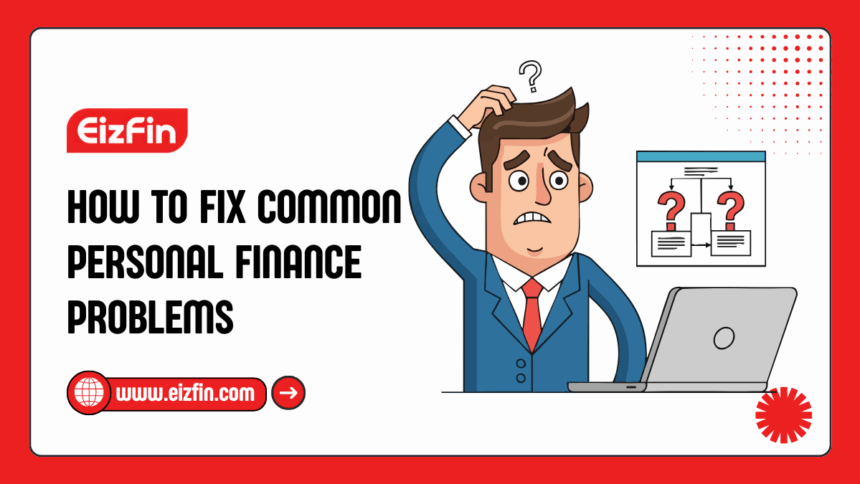
This comprehensive guide on how to fix common personal finance problems will walk you through real-world issues people face and practical solutions you can start using immediately. Whether you’re dealing with debt, overspending, lack of savings, or poor financial planning, this article is designed to help you regain control of your money and build long-term financial stability.
Understanding Personal Finance Problems and Why They Happen
Personal finance problems don’t appear overnight. They usually develop due to a combination of lifestyle choices, lack of financial education, unexpected life events, and emotional spending habits.



Some of the most common reasons people face financial trouble include:
- Not tracking income and expenses
- Living beyond their means
- Relying heavily on credit cards
- Lack of emergency savings
- No clear financial goals
- Poor investment decisions
Recognizing the root cause is the first step in learning how to fix common personal finance problems effectively.



1. Overspending and Living Paycheck to Paycheck

Overspending is one of the biggest personal finance problems worldwide. Many people earn enough but still struggle because expenses exceed income.
Why Overspending Happens
- Emotional or impulse purchases
- Lifestyle inflation as income increases
- Easy access to credit cards and buy-now-pay-later options
- Lack of a spending plan
How to Fix Overspending
- Track every expense for at least 30 days
- Separate needs from wants
- Set monthly spending limits
- Use cash or debit instead of credit for discretionary spending
- Apply the 24-hour rule before non-essential purchases
Simple Budgeting Framework
| Expense Category | Recommended Percentage |
|---|---|
| Housing | 30% or less |
| Transportation | 10–15% |
| Food | 10–15% |
| Savings | 20% |
| Personal & Fun | 10–15% |
A structured budget is one of the most effective tools when learning how to fix common personal finance problems related to spending.
2. Not Having a Budget or Financial Plan
Many people believe budgeting is restrictive, but in reality, it gives freedom and clarity.
Problems Caused by No Budget
- No idea where money goes
- Inconsistent saving habits
- Difficulty paying bills on time
- Increased debt
How to Build a Simple Budget
- Calculate monthly net income
- List fixed and variable expenses
- Allocate savings first, not last
- Adjust spending categories monthly
For deeper budgeting strategies, you can explore trusted financial resources like:


These platforms offer reliable insights aligned with responsible money management.
3. Credit Card Debt and High-Interest Loans
Debt is one of the most stressful personal finance problems, especially when high interest rates trap you in a cycle of minimum payments.
Common Debt Mistakes
- Paying only minimum balances
- Ignoring interest rates
- Taking new loans to pay old ones
- Not tracking total debt
How to Fix Debt Problems
- List all debts with interest rates
- Stop using credit cards temporarily
- Choose a repayment strategy
- Negotiate interest rates where possible
Debt Repayment Methods Comparison
| Method | Best For | How It Works |
|---|---|---|
| Snowball | Motivation and quick wins | Pay smallest balance first |
| Avalanche | Saving more on interest | Pay highest interest first |
Learning how to fix common personal finance problems often starts with eliminating toxic debt.
4. No Emergency Fund
An emergency fund is not optional; it’s essential. Without it, any unexpected expense can derail your finances.
Why Emergency Funds Matter
- Covers medical emergencies
- Prevents debt during job loss
- Reduces financial stress
- Protects long-term savings
How Much Should You Save?
- Minimum: 3 months of expenses
- Ideal: 6 months of expenses
How to Build an Emergency Fund Faster
- Automate savings
- Use windfalls like bonuses or tax refunds
- Cut temporary expenses
- Store funds in a high-yield savings account
Emergency savings are a cornerstone when mastering how to fix common personal finance problems.
5. Poor Saving Habits and No Financial Goals
Saving without a goal often leads to inconsistency and frustration.
Problems With Random Saving
- Money gets spent easily
- No motivation to continue
- No progress tracking
How to Fix Saving Problems
- Define short-term and long-term goals
- Assign timelines to each goal
- Automate contributions
- Separate savings accounts by purpose
Examples of Financial Goals
- Emergency fund
- Home down payment
- Retirement
- Education
- Travel fund
Clear goals make saving purposeful and sustainable.
6. Lack of Investment Knowledge
Many people avoid investing due to fear or misinformation, missing out on wealth-building opportunities.
Common Investment Mistakes
- Keeping all money in cash
- Chasing trends without research
- Panic selling during market drops
- Not diversifying
How to Invest Smarter
- Start with low-cost index funds
- Understand your risk tolerance
- Invest consistently, not emotionally
- Think long term
Reliable education platforms like https://www.morningstar.com can help investors make informed decisions without hype.
Understanding investments is a key part of how to fix common personal finance problems related to long-term wealth.
7. Ignoring Retirement Planning
Delaying retirement planning is a costly mistake that compounds over time.
Why People Delay Retirement Savings
- Feels too far away
- Other financial priorities
- Lack of employer benefits
How to Fix Retirement Issues
- Start with employer-matched plans
- Increase contributions gradually
- Use tax-advantaged accounts
- Review retirement goals annually
The earlier you start, the less you need to save monthly due to compounding.
8. Financial Stress and Emotional Money Decisions
Money is emotional. Stress, fear, and comparison often lead to poor decisions.
Emotional Triggers That Hurt Finances
- Retail therapy
- Fear of missing out
- Social pressure
- Financial shame
How to Control Emotional Spending
- Identify emotional triggers
- Replace spending with healthier habits
- Unfollow social media accounts that encourage excess consumption
- Focus on long-term goals
Financial wellness improves when emotional awareness improves.
9. Not Tracking Net Worth
Many people track income but ignore net worth, which is the true measure of financial health.
What Net Worth Reveals
- Overall financial progress
- Debt vs asset balance
- Long-term trends
How to Track Net Worth
| Assets | Liabilities |
|---|---|
| Cash & savings | Credit cards |
| Investments | Student loans |
| Property | Mortgages |
Update net worth quarterly to stay accountable.
10. Lack of Financial Education

One of the most overlooked personal finance problems is simply not knowing what to do.
Why Financial Education Matters
- Prevents costly mistakes
- Improves confidence
- Encourages better decisions
How to Improve Financial Knowledge
- Read finance blogs regularly
- Follow credible finance educators
- Learn basics before advanced strategies
- Apply what you learn consistently
Education is the foundation of how to fix common personal finance problems permanently.
Frequently Asked Questions (FAQs)
What are the most common personal finance problems?
The most common personal finance problems include overspending, debt, lack of savings, no budget, and poor financial planning.
How can beginners fix personal finance problems?
Beginners should start by tracking expenses, creating a budget, building an emergency fund, and setting clear financial goals.
How long does it take to fix personal finance problems?
It depends on income, debt, and discipline, but noticeable improvements can occur within 3 to 6 months with consistent effort.
Is budgeting really necessary?
Yes, budgeting is essential for understanding cash flow and controlling spending effectively.
Can low income still manage personal finance well?
Absolutely. Smart money management is about habits and priorities, not just income level.
Money problems don’t define you, but how you respond to them does. Learning how to fix common personal finance problems is not about perfection; it’s about progress. Small, consistent actions taken today can lead to financial freedom tomorrow.
Thank you for reading this guide on EizFin. If you found value in this article, stay connected with us by following EizFin on social media, enabling push notifications, and subscribing to our newsletter so you never miss practical insights, investing tips, and the latest finance updates designed to help you build a stronger financial future.